Showing posts with label Riesling. Show all posts

Thursday, March 27, 2014

Our Winemaking Dream Coming True!!!

After years of making wine for others, we're finally on our way to making our own Willamette Valley wine. The Willamette Valley has been forging a reputation as home to some of North America's finest cool climate wines over the past 40 years. It is now widely recognized as one of the world's premier Pinot Noir producing regions. The contracts are signed and we are sourcing Pinot Noir from the McMinnville AVA and Riesling from the Chehalem Mountains AVA...YAY!!! The wines will be made by us using the techniques we've learned during our travels. We've started a fund to help with the process and are asking for donations. Any help you can give would be greatly appreciated. Plus, it's a great way to try our wines :) Check out our link for additional information @ http://www.gofundme.com/6nlx88

For those of you who are unfamiliar with our background, we met in Australia 2 years ago and discovered we shared a passion for wine. We then traveled the world together, working vintages and honing our winemaking skills. As for our work backgrounds, I am a Certified Sommelier who has worked vintages in Australia, Germany, New Zealand and France. Jason has worked 12 vintages in France, Portugal, South Africa, Germany, Australia and New Zealand. He is currently working a Viticulture Internship in the Willamette Valley. 

Chehalem Mountains vineyard...and our upcoming 2014 vintage!

Vintage 2013 in Alsace, France

Vintage 2013 in Alsace, France

Vintage 2012 in Martinborough, New Zealand

Our visit to Alsace after working vintage in Germany 2012

Vintage 2012 in Pfalz, Germany

Thursday, September 12, 2013

Best NZ Winery Restaurant

Pegasus Bay has been awarded the Cuisine Magazine New Zealand Winery Restaurant of the Year...for the past 5 years in a row. No small feat, especially coming from the less known region of Waipara Valley, meaning 'muddy water' in Maori, and just 30 minutes north of Christchurch. Not the most appealing name for a wine region in my opinion but Waipara's proximity to the ocean allows for warm days and cool nights resulting in a prolonged ripening period. This, combined with its terroir, promotes great flavor development while retaining natural acidity making wines from the region a true pleasure to drink and Pegasus Bay is a prime example!

Since I've been in New Zealand, I've learned about The Family of Twelve, which are 12 family owned wineries throughout New Zealand that strive to produce great New Zealand wine with the help and support from each other. Pegasus Bay is one of the 12. All are well respected and have great reputations for making consistently great wines. From the few I've tasted, I'd have to agree. I would love to taste at all 12 some day...9 down, 3 to go!

Not only does Pegasus Bay take special care of their wines, but they also take great pride in their restaurant cuisine. One of the beautiful things about the Pegasus Bay Restaurant is the menu is created for the wines they actually produce and each dish is matched with a recommended wine. They also use locally grown ingredients and change their menu regularly to utilize seasonal ingredients allowing for variety. Their highest rated dish by Cuisine Magazine is the whole Muscovy duck braised and crisp fried with fig jus. It's meant to be shared and served with roasted beetroot, Jerusalem artichokes, arugula, butter crunch, mint, orange, ricotta, fennel, pistachios, raspberry vincotto. It's a complete meal for two at only $98.00. It's suggested pairing is with the Pegasus Bay PRIMA DONNA Pinot Noir or the MAESTRO Merlot/Cabernet blend. Sounds amazing! However, we did not order the duck because we wanted to taste a wider range from their menu and we were not disappointed.


The Lineup: We had an amazing tasting at Pegasus Bay and were able to taste their entire range. Absolutely beautiful wines! You can really tell they take great pride in their craft. All wines had great balance, elegance and minerality.


One of the stand outs: BEL CANTO Dry Riesling 2011. The nose was rich with hints of botrytis, ripe stone fruits and slightest hint of green tea, which added an interesting component to this already complex wine. It was developed and reminiscent to German Riesling from the Pfalz. It's one of the highest compliments I can give because the Pfalz produces some of my favorite Rieslings.  

Our appetizer: The Golden Bay cockles, chorizo, fennel, garlic and parsley paired beautifully with the 2011 BEL CANTO Dry Riesling.


Sent out compliments of the chef...thanks! Smoked venison carpaccio, pinot cherries, horseradish cream and parmigiano reggiano. Yummy! Matched with VIRTUOSO Chardonnay or PRIMA DONNA Pinot Noir. 


Main dish: Char grilled Angus/Hereford 350g, 30 day aged rib eye with roast shallots, watercress, red wine butter, jus and served with a selection of mustards. Recommended pairing with PRIMA DONNA Pinot Noir or MAESTRO Merlot/Cabernet. This was my favorite out of everything! It was so tender, juicy and packed with flavor...it melted in your mouth! Went beautifully with the MAESTRO.


Main dish: Marinated Canterbury lamb cutlets with cavolo nero, chorizo, borlotti beans, ricotta, lemon and olive dust. Recommended pairing with PRIMA DONNA Pinot Noir or MAESTRO Merlot/Cabernet. I preferred it with the MAESTRO.


And our dessert was the pear tarte tatin, cardamom ice cream, pistachio praline. I asked the server to surprise us with dessert. The tarte tatin was secretly what I wanted and I was so excited when it came out that I forgot to take a picture...oops! We enjoyed it with the FINALE Semillon. Superb!

And our very happy faces enjoying one of the best meals of my life!

Later, I got to taste the 2010 vintage at Wine Tastes, a wine shop in Queenstown. Dare I say, better than the 2011?...yes I do! :)

Friday, June 14, 2013

Martinborough's Finest


The special character of Martinborough’s Pinot Noir is created by no one factor. A unique blend of location, soil and climate all contribute to the quality of the wines from Martinborough. Martinborough is located in a rain shadow with naturally breezy conditions. Most of the vineyards sit on a 20,000-year-old dry riverbed with mineral-laden soils. The cool climate results in low yields and allows for cool night and warm days over many months, which builds depth and intensity of flavor with finely textured tannins. These conditions not only create spectacular Pinot Niors with excellent concentration and texture but also distinctly fruity Sauvignon Blancs, aromatic and mineral Rieslings and elegant Chardonnays.

Te Muna Road Vineyard

Comparisons can be made to Burgundy, the classic home of Pinot Noir. Not only do Martinborough’s Pinots have the ripe cherry fruit components of a typical New World Pinot Noirs but also a savory and earthy quality traditionally associated with the great Pinots of Burgundy. One of the best examples of the region is 2011 Block B Pinot Noir from Schubert Wines. This wine has many layers, intense red cherry flavors with hints of herbs initially followed by savory spices and mushrooms with soft tannins, fine concentration and a fresh splash of acidity. 

At $40 per bottle, Schubert Block B Pinot Noir is better priced than most Burgundies and has the aging potential with the best of them. It has a wide range of food pairing possibilities and can go well with roasted or braised pork belly to chicken in a mushroom cream sauce to poached salmon.

The owners and winemakers of Schubert Wines, Kai Schubert and Marion Deimling have traveled the world in search for the best Pinot Noir site and they chose New Zealand over Oregon, California and Australia. The winemakers explored over 100 properties in New Zealand before settling in Martinborough in 1998. Their efforts were well worth it and their Pinots have out ranked many worldly competitors. In 2010, Schubert Wines’ 2008 Block B won the International Trophy for best Pinot Noir, beating 19 other countries including many of the world’s most famous wine producers of Burgundy.

The man himself, Kai Schubert, a truly lovely person

Another fine example of Martinborough Pinot Noir is the 2012 Pinot Noir of Poppies. After 12 years of grape growing and making wine at award winning Dry River Wines also located in Martinborough, Poppy and Shayne Hammond left to open their own boutique winery. They continue their same roles with Poppy as the Chief Winemaker and Shayne as the Viticulturist…a wine couple’s ultimate dream. The wine production is small scale and very personal. Shayne manages small plots of old vines while Poppy transforms the grapes into elegant wines. The inaugural 2012 vintage has proven more successful than even they anticipated. All their 2012 wines have sold out except the 2012 Pinot Noir, which they just released in May. The wine is perfectly balanced with clean fruit flavors of fresh cherries and a great mouthfeel.

Shayne has also worked as a chef and creates local seasonal platters to enjoy with their beautifully crafted wines. Not a bad way to spend a sunny afternoon in Martinborough!

The exceptional conditions of Martinborough also share some of the same qualities as the Rheingau region in Germany, which produces world class Rieslings. One of the best Rieslings in Martinborough is from one of the most surprising and interesting producers, Hiroyuki Kusuda. I say surprising because of his unique path into winemaking. Hiro is from Japan and with that said didn’t drink wine until he traveled Europe while on break from law school. He fell in love with wine upon his first introduction but continued to practice law after graduation and kept wine as a hobby. After very successful years of practicing law, he could no longer resist the idea of becoming a winemaker. In 1996 he moved to Germany to learn the language and then started studying Oenology and Viticulture at Geisenheim University the following year. This man learned a third language from his second language! How amazing is that?! An experiment for his thesis brought him to Martinborough where he fell in love the region. After graduation, he moved to Martinborough and started up his own wine label, Kusuda Wines, in 2001.

It was such an amazing experience tasting with Hiro. He welcomed us into his home, gave us slippers to wear [Japanese style as he would say], introduced us to his family and poured wines from his cellar.

Each vintage, Hiro gets about 20 Japanese student volunteers to travel to Martinborough for the honor of working for him and learning his craft. He prides himself on the careful selection of each berry. It is even said that he uses tweezers on the sorting table. He delivers impeccable purity of fruit and place with such finesse. 

Hiro didn't think he could make Riesling in Martinborough but found it a 'pleasant surprise' and so did I! The nose is mirrored on the palate with ample and integrated ripe peaches and apricots with fresh and bright green apple acidity. The fruit and minerality are in perfect harmony...clean, driven and well structured.

Research into its climate and soils has revealed small areas in Martinborough share the same qualities to some of the world’s finest wine regions. The Rhone Valley has many high quality sought after characteristics similar to Martinborough. Martinborough is sited in the driest location on the North Island. The soils of the Martinborough Terrace are alluvial loam layered over very deep gravels, which ensures exceptional drainage and warmer profiles similar to Rhone. The diurnal temperature, hot days and cool nights, allow fruit to ripen slowly and gently. It is a known fact to build depth of flavor takes time and with one of the longest growing seasons [from flowering to harvest] in New Zealand, Martinborough has no trouble with that!

View of the Martinborough Terrace from Escarpment Wines

Syrah is the dominant red grape varietal in the Northern Rhone Valley. It is common practice in Cote Rotie to blend Syrah with small amounts of Voignier, the dominant white varietal of the Northern Rhone. Syrah produces some intense and rich wines but blending with Viogner softens the wine both on the nose and palate. One of the best examples of this classic Syrah Viogner blend is made by Martinborough Vineyards and it was a pleasant surprise to find this blend in Martinborough's repertoire. 

The 2009 Syrah Viognier is a lush, spicy and complex yet delicate wine. It has intense aromatics of black pepper, cured meat and dark fruit with a lovely floral lift of violets. The palate is generous and succulent with velvety smooth tannins. 

Thursday, March 14, 2013

The Spicytraminer

After learning to make Thai curry, I learned I could handle a bit more heat in my curries. So the next time I had the chance to order yellow curry I did and ask them to spice it up a bit. Curries are particularly tricky when it comes to pairing a wine, the hotter the curry, the more problematic the wine pairing. Opt for flavors that counter heat like fruity, off-dry Rieslings from Germany or rich, full-bodied style Gewurztraminers from Alsace. As long as you go easy on the chili, there is no reason why wine should give way to beer as a beverage of choice.

Fortunately, I brought the perfect wine to go with a spicy curry dish, 2010 Gewurztraminer Les Folastries from Domaine Josmeyer. Asian inspired dishes typically call for more aromatic wines and Gewurztraminer works brilliantly with milder spices and Oriental and Thai dishes. This particular Gewurztraminer is a very versatile wine with hints of rose petal and tropical fruits on the nose. The palate is full with lychee and ginger spice, mild with notes of rose and minerality. The wine is a little high in alcohol, which is typical to the Alsace region and the acid is slightly low as is frequently the case with this variety, but the fine acidity gives a nice grip and a little structure which makes it a great food wine.

It’s a stunning value at only $30 a bottle. It can also compliment any tomato-based dish as well as smoked salmon…cheers!


Switching it up a bit with some Seafood Yellow Curry J

P.S.
If you are not typically a fan of dry Gewurztraminers like myself than this is the Gewurtz for you! The winemaker, Celine Meyer, says this is a Gewurztraminer for those people who don’t like Gewurztraminer…and I agree. Usually, many Gewurztraminers smell and taste like rose water to me. And rose water reminds me of my grandmother’s perfume, which is a nice memory and fragrance but not something I personally want to drink. Les Folastries has hints of rose petal, which is typical for the varietal but is subtle and well integrated with other flavors that make it very pleasant to drink.


Thursday, November 22, 2012

Rheinhessen Recap


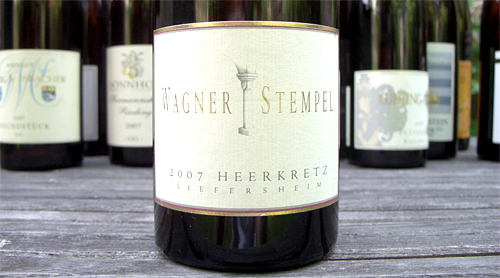
The Rheinhessen is the region just North of the Pfalz and just a 30-minute drive to the base. Since it has similar soil and climate to the Pfalz, the wines are similar in style. Generally, the Pfalz has a bigger, broader palate and fermented dry. The Rheinhessen is typically not as broad and with a leaner style of elegance. I am not well acquainted with the nuances of Rheinhessen so I asked my cellar master at Koehler-Ruprecht, Johannes, for recommendations. He recommended Weingut Keller for its consistency and popularity, Weingut Wittmann for its distinguished mineral intensity, Weingut Gutzler for its SpätburgunderThörle for its Silvaner and Weingut Wagner-Stempel for its rich, opulent style.


Map of the 13 different wine regions of Germany

Weingut Keller


Rheinhessen is typically synonymous with Keller. So Weingut Keller was an obvious recommendation but, unfortunately, they were all sold out of wine and couldn’t take any tasting appointments until next spring. Bummer! Apparently, they typically sell out of their Grosses Gewächs wines within 2 weeks. Keller is known for wines that are enormously rich and complex but not high in alcohol. According to Keller, it is more important to have precision of the aroma and flavour than sugar levels.  Sounds like a great philosophy for great German Riesling. I can’t wait to try their wines next year!

Weingut Wittmann

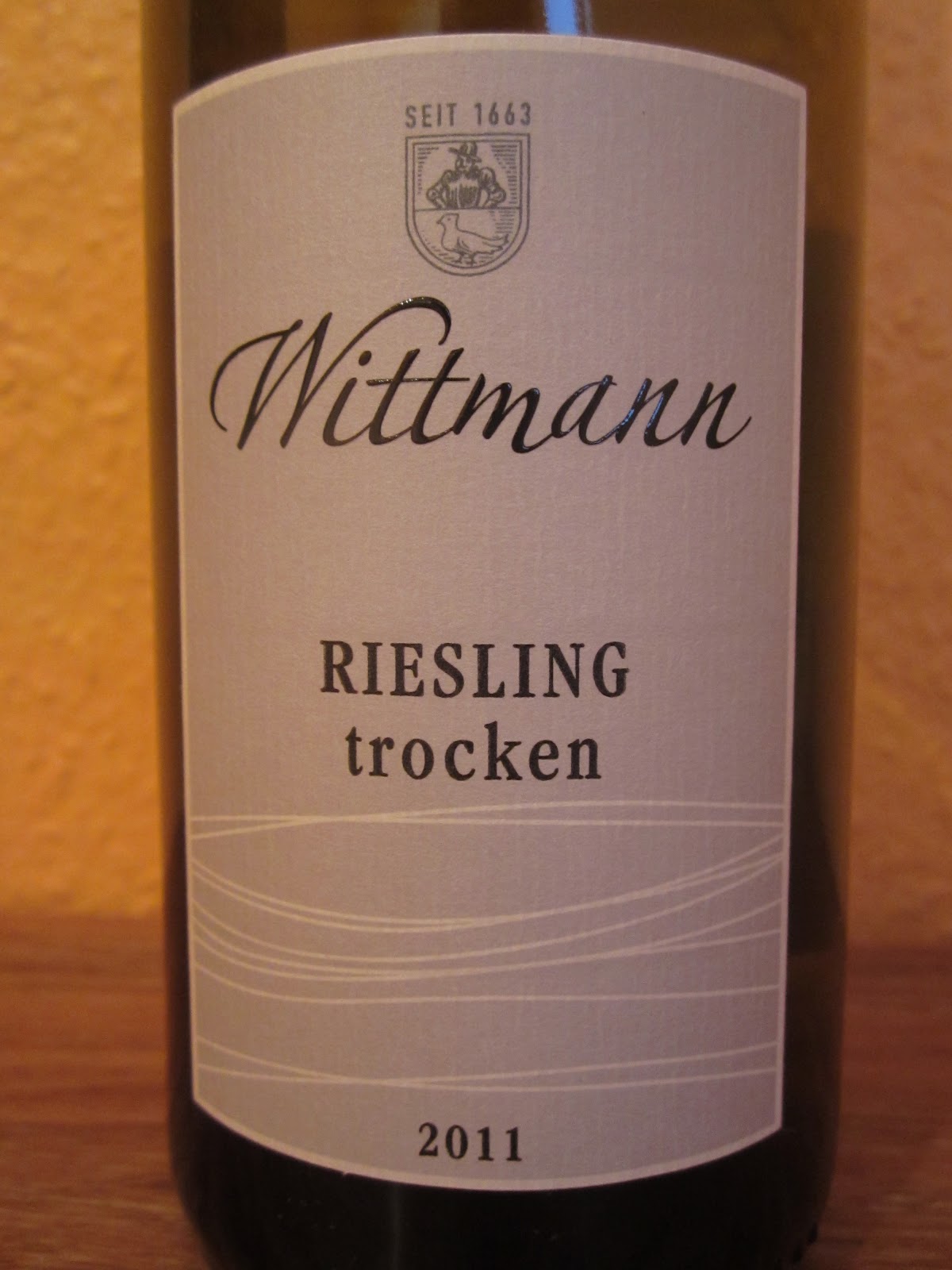
Weingut Wittmann is another well-known winery in Rheinhessen. They produce pure, deep wines with freshness and elegance and are regarded as one of the finest Riesling producers in Germany. The winemaker, Philipp Wittmann, was nominated for the 2013 Winemaker of the Year by Gault Millau, the German wine guide. Pretty high accolades and deserving of a visit I’d say. Unlike Keller, they did have wines to taste but, similarly, a majority were sold out. The only Riesling for tasting was their 2011 Riesling trocken Gutswein. The nose had intense peach aromas with creamy undertones, and a clean and crisp palate with a fresh lemon finish. We also tasted their 2011 Weissburgunder trocken ‘S’ and 2011 Chardonnay trocken ‘S’, and if the rest of their wines taste as complex and balanced as the entry level Riesling then I can only imagine and can’t wait to taste the rest of the range next year. 


Weingut Gutzler

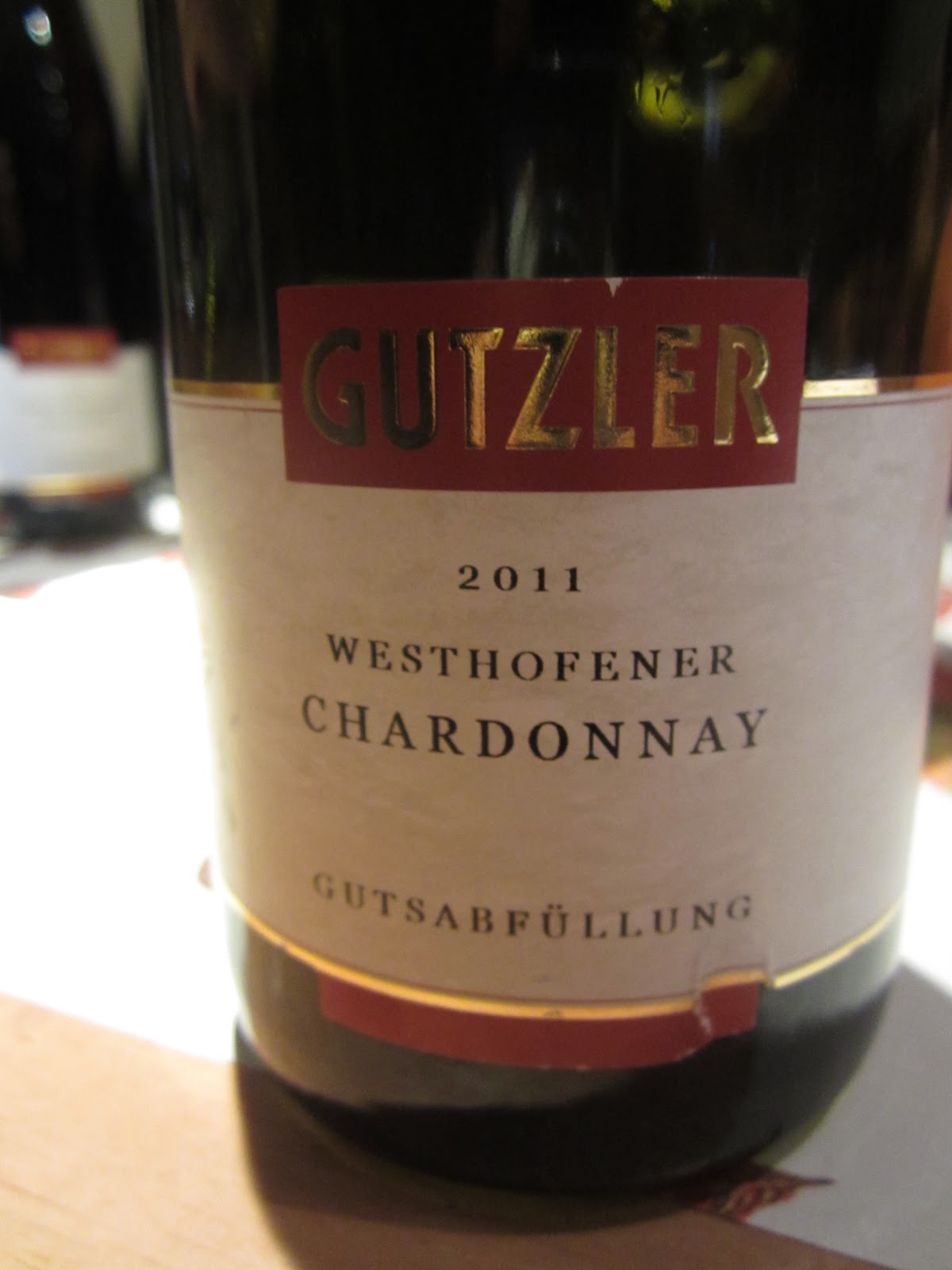
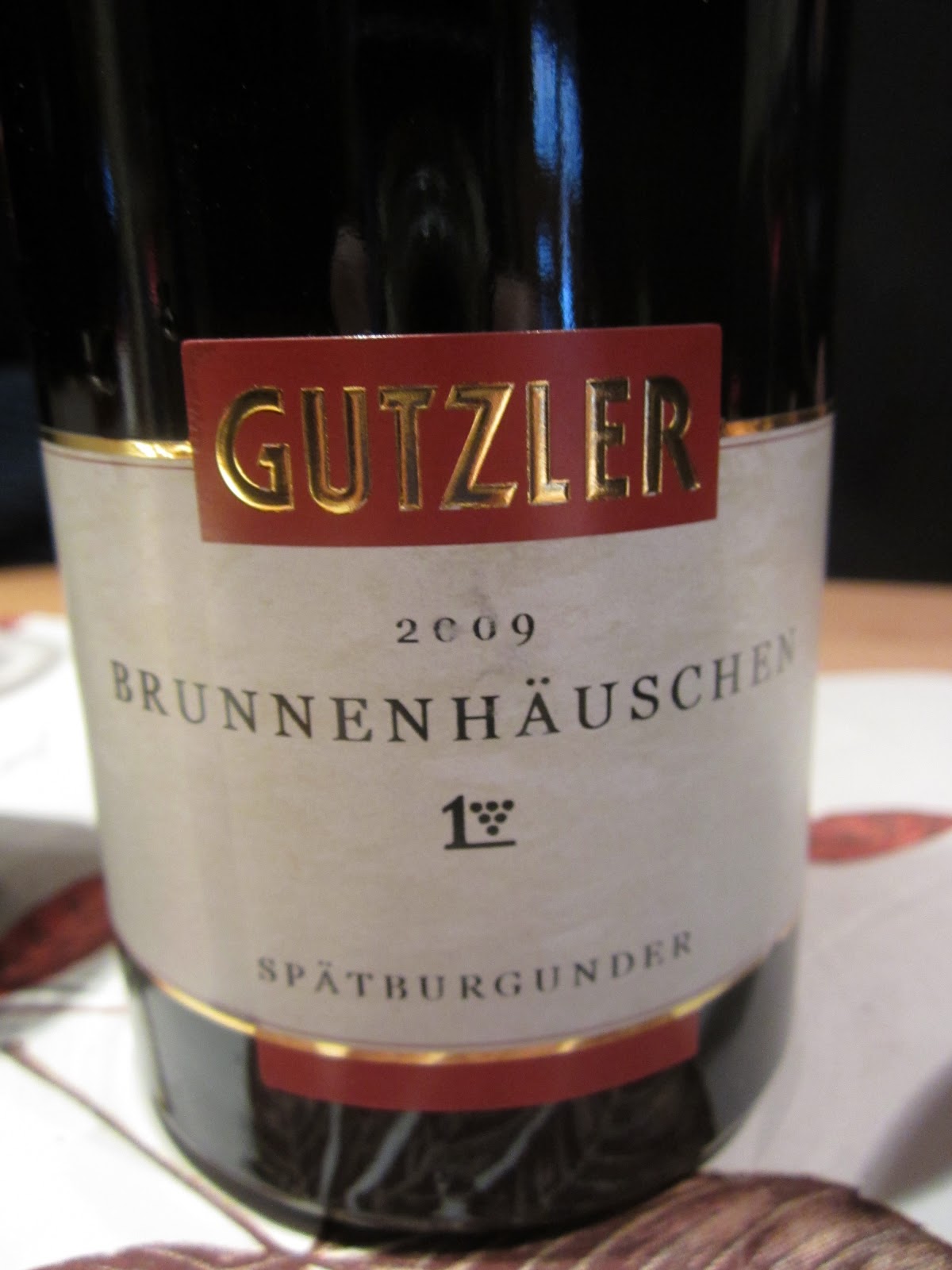
Weingut Gutzler was recommended for its Spätburgunder and I have to agree. Until recently, I’ve been having some trouble finding a Spätburgunder that is well balanced and food friendly. Most have been too light, or too sour, or even too bitter but Gutzler’s Spätburgunders were terrific!  We tasted with the son and current winemaker, Michael Gutzler. He let us taste their entire range of wines and informed us that yields are kept down to 25 hectoliters/hectare in order to maintain the highest quality. The care of the vines and soil really pays off, as you can taste the typicity of their soils and grape variety


78-year-old vine Silvaner with hints of melon on the nose and pronounced minerality and salinity on the palate


100% new oak with no malolactic fermentation gave this wine developed banana aromas with leesy notes and an appetizing acidity and freshness

This nose was dense and complex, with beautiful aromas of white peach. Slightly salty and extremely mineral on the palate with incredible length

This wine had finesse, complexity and length with hints of smoke, developed black cheery flavours and fine tannins that build on the finish

Thörle

It was the Silvaner that was highly recommended, but it was the Spätburgunder that blew me away! Such a great tasting, not only did I get more exposure to Silvaner but I tasted a Spätburgunder that I really enjoy! 


 A very distinctive nose of fresh herbs and notes of obvious fruit ripeness. It was spicy and well concentrated on the palate, with light herbs returning on the long finish. It lacked acidity because of malolactic fermentation, but the wine is complex, vibrant and still young.

A brilliant nose with ripe and succulent fruit aromas, very vibrant and mineral on the palate with a warm finish


The Riesling had a deep, cool mineral nose with ripe fruit flavours. It was smoother on the palate, lacking its cool, delicate raciness implicated by the nose. The Silvaner had concentrated minerality with subtle fruit aromas and a fine acidity. Sufficiently soft on the palate makes it a perfect pairing with the delicate flavours of seafood and white mea


Made from the best grapes of Hölle vineyard. Hölle means ‘hell‘ in German and was given this name because it’s the hottest vineyard in the region. The wine had a nose of ripe black cherry with the freshness of ripe strawberries on the palate, great medium body with balanced acid and a long finish


Weingut Wagner-Stempel

Since Weingut Wagner-Stempel is located in the most southern part of the Rheinhessen and closest to the Pfalz, I am not surprised to hear of its rich, opulent style, which sounds reminiscent to the Pfalz. Unfortunately, I was unable to taste the wines because on the day I visited Rheinhessen the winery was closed for his son's birthday. But I'll keep you posted as I plan to taste their wines next week.


Thursday, November 8, 2012

Ich liebe Deutschland!

Hello again! Sorry it's been so long but I have been busy with work and tastings…well, let’s be honest, more tasting than work but then technically for me tasting is work J

I’m  living in a small village called Kallstadt...isn't it beautiful?!

Anyways, it’s absolutely beautiful here! I love work and the people I work with. My General Manager, Dominik, and Cellar master, Johannes, speak perfect English and are always willing to answer my questions, which we all know I tend to have many ;) The majority of the young, German population speak English well because they learned it in school. But for the last two months, I've been working closely with a Polish couple, Hela and Andreas, who don’t speak any English. We’d work in the vineyards together, just the three of us, leaf thinning and it was very interesting trying to communicate. Mainly, we used our hands and repetition of words. To my surprise, we learned to communicate pretty well and with the help of my German-English dictionary, which was a great investment, I even learned some German. Even Dominik was impressed with how much I learned. I taught Hela and Andreas some English too. Johannes thinks it’s funny that I speak English to them and they speak German to me and somehow we understand each other perfectly. 

Our Grosses Gewächs vineyard, Saumagen, which means 'pig stomach' in German. Weird name for a vineyard but it's the traditional cuisine for the region and surprisingly good! 

During picking season, Koehler-Ruprecht employs extra help, 9 more Polish people who are related to Hela and Andreas in different ways [sister, cousin, nephew, etc.] and me! I thought my new German skills would come in handy, however, the Polish schools teach Russian instead of German or English L But they taught me how to say good morning [dzień dobry], thank you [dziękuję] and you’re welcome [proszę] in Polish. They tried teaching me some Russian too, but that was just getting out of hand…my brain couldn’t keep up!

The picking crew but I like to call us the Trauben Mafia. Trauben was one of the first words I learned and means grapes in German. I think it has a nice ring to it J

Lucie, Andreas’ sister, picking in Saumagen 

Grauburgunder [aka Pinot Gris],  Weißburgunder [aka Pinot Blanc]  and Gewürztraminer are the first to be picked because they ripen the fastest. Above is Gewürztraminer and my favorite grape to snack on in the vineyard...but I only ate a few, I promise ;)

Above is Grauburgunder and that's Andreas in the back driving the forklift

Next to be picked is Scheurebe, Chardonnay and Spätburgunder [aka Pinot Noir]. Above is Spätburgunder

Lastly, my favorite, Riesling. The Riesling is picked in an order of it’s own according to the different Prädikat levels. We go through each Riesling vineyard 3-4 times by the end of harvest.


First we cut out all the botrytis, which is used for blending and is the main component for the sweet style wines

The green grapes are picked first and are the base for the Kabinett wines


Then the golden berries, which make the delicious Spatlese

And finally, the amber berries used to make the beautifully ripe Auslese


Picking was great! I got to see the sunrise everyday, was surrounded by beautiful [schön] scenery and got to practice my German with Hela. It started getting pretty cold towards the end. At 0 degrees Celcius, I lost track of how many layers I was wearing but, even with the cold and rain, I liked going to work everyday. I got to work with great people and learn each and every day.

One of my many photos of the beautiful sunrise J

Teaching Derek how to drive the tractor...haha yeah right, it's obviously the other way around. Thanks Derek!

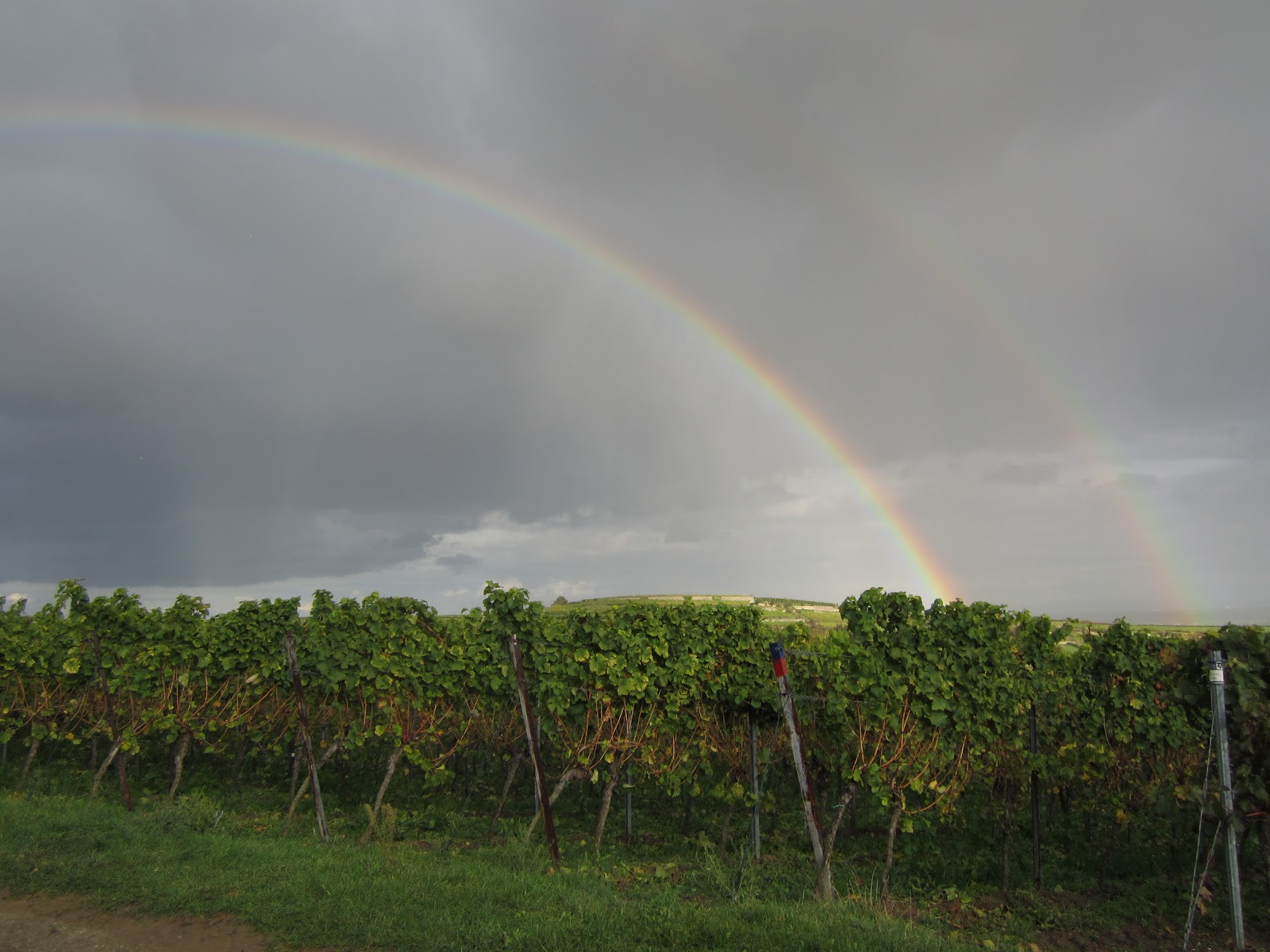
Call me optimistic but it's even beautiful when it rains...

And you get not just one but two rainbows [regenbogen


P.S.
I linked the German and Polish words to Google Translate so you can hear how they are pronounced. You try…and good luck ;)