Tuesday, May 7, 2013

South Korea's Drink of Choice

Let me introduce you to makgeolli, pronounced ma-co-lee. It is an alcohol beverage native to Korea made from fermented rice with a low alcohol content of about 6-8%. It is sometimes called 'rice beer' or 'rice wine' and originated from the farmers, which is why the beverage is also known as nongju, meaning farmer in Korean.
 
It is traditionally served from a large ceramic bowl and ladled out for drinking into smaller cups or bowls. 

Makgeolli is unfiltered, hence its milky, opaque appearance and should be shaken well before serving.

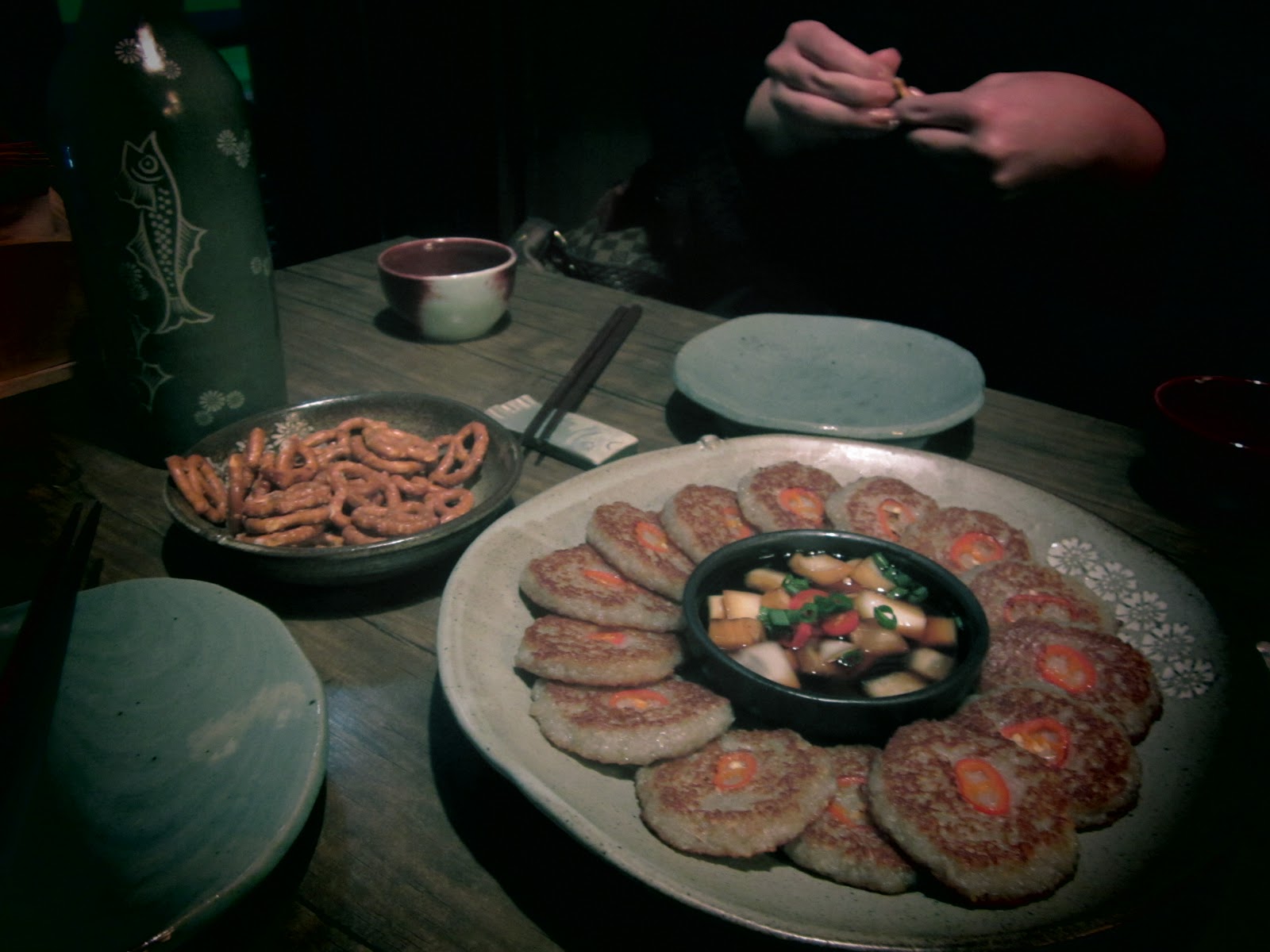
Makgeolli has a mild and slightly tangy flavor that makes it a perfect pairing for strong flavors of Korean foods. There are many makgeolli bars throughout South Korea that offer many different types of makgeolli served with traditional Korean pancakes like this bindaetteok...please excuse the pretzels, they're not traditional cuisine J

Makgeolli's taste primarily depends on its main ingredient, rice. Despite an identical recipe, the flavor depends on where the rice is produced. Some provinces are known for sweetness while others produce a bold character. Above is a tasting flight from different provinces and it is surprising the difference you can actually taste. I found some to have more sweetness or fruit notes like apple or pear and some even tasted sour compared to the others.

Makgeolli can even be infused with many different types of fruit; the above is infused with tomato. 

Our smiling faces after a great makgeolli night!

Wednesday, April 10, 2013

It's that time of year again...

It's harvest time here in Martinborough! We are about 50% through picking. We've already picked all of our Pinot Gris, most of our Sauvignon Blanc, 35% of our Pinot Noir and are currently picking our Chardonnay. It's shaping up to be an amazing vintage and one of the best in the last decade!

Te Kairanga double sort all their top quality fruits. On the sorting table [left to right], we have Chief Winemaker John Kavanagh, Frank Schafer of Weingut Schafer in the Pfalz, Chris our Lead Cellar Hand and Ben Hancock, the one and only Kiwi vintage casual.

No pumps, all press loads and most tanks are filled using gravity

And this is my home for vintage...I'm the 'lab girl' but learning all about wine chemistry and so more than I ever expected. 

And meet the international vintage crew [left to right]... yours truly, Peter Miterko from Utah, Olga from Poland, Frank Schafer from Pfalz, Germany and Michele de Pace of Perusini in Friuli, Italy. And don't judge what they are all drinking. There is a famous saying...It takes a lot of beer to make good wine J

Sunday, March 31, 2013

Top-notch Korean Cuisine

Below are some of my favorite traditional Korean foods that I had the pleasure of tasting...

My welcome to South Korea dinner with my friends! Korean barbecue, the first thing that comes to my mind when I think of Korean cuisine...well it used to be. And this particular Korean barbecue is galbi meaning marinated beef short ribs

I can't recall the proper name for this dish but I like to call it fatty delicious duck! Grilled duck with grilled onions and mushrooms, rice, kimchi, daikon and other sides all served in a lettuce wrap...sounds healthy until you realize that the onions and mushrooms are cooking in the duck fat but that's why it tastes so good J

My friends Elizabeth and Read showing me how it's done. Apparently, you cook and cut as you go. Learn something new everyday!

Dalk galbi, big stir-fry of chicken, vegetables and rice cake with sides of chilled radish soup and kimchi. With communal meals like this one, you order by the number of servings you would like and apparently the food is so abundant that you should typically order one less than the amount of people present. For instance, there were four of us so we ordered 3 servings. They will still bring out the appropriate amount of side dishes for each person, as they are accustomed to this ordering rule. And trust me this was more than enough for 4 people...we probably could have done with just 2 serving portions to share but our eyes were bigger than our stomachs.

Ready to eat...and rice cake, which is made of rice flour and has a dense slightly gummy texture, sounds so weird but tastes so good...it's a new favorite!

And they have a round 2...they add rice and cheese half way through the meal and not just because we were Americans...it's an option on the Korean menu J

Very happy and content faces...I'm ready for bed!

Bibimbap, another classic Korean dish and considered a traditional brunch or at least that's what I was told. I wouldn't consider this brunch but it was delicious and very healthy tasting. Well, until I tried the candied fish for my first time...and last I might add!

Oh yeah, spicy pork spine soup!!! [aka Gamjatang] I didn't talk too much through this meal because it was so damn good. Hot meaty soup with the right amount of spice to keep you warm in the 0 degree Celsius weather.

The proper way to eat. So tender just pull the meat off the bone and then put the loose meat back in the broth and enjoy!

And have you noticed every meal comes with side dishes which are always kimchi and daikon radish. You either love it or hate it and I definitely LOVE it!

I have no idea what it says but they love their daikon. This poster was on every subway train and made me smile J

Or does this look more familiar? Ramen, it's the Koreans' quick on-the-go snack and in every convenience store.

Just for some humor...this is an actual Korean school workbook and what they are learning about America...I think it needs updating!

Tuesday, March 19, 2013

Korean Markets

After Vietnam, I headed to South Korea to visit some friends from college who are English teachers. Being back in the Northern Hemisphere was a bit of a shock. The cold kind of smacked me in the face after leaving the warm embrace of Southeast Asia but the food did more than make up for it! It’s obvious the Koreans love their food and so do I J Just walking through their markets and there was fresh food everywhere…to eat now or take away and I did a bit of both. 


Kimchi Bar or that's what I call it. Kimchi is Korea's national dish and served with practically everything. This bar had different types of kimchi ranging from the traditional cabbage to radish and all with different ferment ages. 

Fresh seafood was ubiquitous from snails to scallops to many different freshly caught fish...most still alive!

Huge range of dried fish and shrimp...it's a Korean thing!

Dried stingrays...not sure what they do with them but I never ate them...well I don't think I did J 

And one of my favorites, mandu. Cheap and tasty steamed dumplings to snack on while I make my way through the market 


Never guess what this is? I've never seen it before...it's whale. I'll try anything once?!

What's a seafood market without some live crab?!

One of the many street carts. Take your pick from Korean pancakes, Korean rice cakes in a spicy sauce [that'll warm you up] and hot fish cake soup [and boy is it fishy!!!]

Meet my lovely tour guide, O-gook. He showed me all the ins and outs of Seoul and most of it revolved around food. And yes, I’m eating mandu again…not sorry bout itJ

Saturday, March 16, 2013

Pho Sure!


I enjoyed my Thai Cooking Class so much that I decided to do it again but this time in Vietnam. With Pho being one of my favorite foods it was an easy decision J To all my fellow San Diegans, if you love the OB Noodle House as much as I do the recipe is below and now you can make it at home!

With centuries under the Chinese dynasties’ reign and 100-year French colonization, Vietnamese culture has many influences and the cuisine has taken a unique shape. The Chinese introduced the use of chopsticks, the art of stir-frying and the consumption of noodles, while the French played a crucial role in the development of the Vietnamese cuisine by introducing techniques of sautéing and different Western foods.

Even with all the foreign influences, Vietnamese cuisine has retained a distinctive character. The Vietnamese are skilled at combining complementary ingredients to form new flavors with contrasting textures. The food is generally healthy, thanks to its reliance on fresh vegetables, stir-frying and the use of vegetable oil rather than butter.

A Vietnamese meal is rarely divided into courses. All the food is served at once and from large family style platters. Most meals include soup, a small salad, stir-fry and another main dish.

 Lunch is served! We also learned how to make vegetable salad with pork and shrimp and grilled pork

Enjoying traditional Vietnamese lunch with my best friend JeLynn. She came all the way from San Diego J

Vietnamese soups stem from the French influence and Pho is the most popular food among the Vietnamese population. Pho is commonly eaten for breakfast, although many will have it for lunch or dinner. Typically, the rice noodle is made of the best variety of fragrant rice called ‘Gao Te’. The most common broth for Pho is made with beef and called Pho Bo. It is made by stewing the bones of cows and pigs in a large pot. But broth can also be made from chicken, which is called Pho Ga.

Below is the recipe for Pho Ga from my Vietnamese Cooking Class in Ho Chi Minh aka the old Saigon. I attended The Saigon Culinary Art Center, which has a restaurant below and was taught by the lovely yet stern Executive Chef, Chef Nguyen. I learned a lot about the Vietnamese culture and cuisine. I got to taste many traditional Vietnamese dishes and had a great time!

Ingredients:
2-4 ½ pound chicken
1 gallon of water
20-30 grams ginger, grilled
1 large onion, grilled
4-5 shallots, grilled
2-3 pieces of star anise
20 pieces of cardamom
2 tsp coriander
2 tsp cinnamon
2 tsp cloves
pinch of pepper
2 Tbsp of salt
3 Tbsp of sugar
2 Tbsp of chicken powder
1 Tbsp of fish sauce
500 grams white rice noodle
cilantro, sliced

Garnishes:
1 medium onion, sliced
2 Tbsp of scallions, cut in julienne
chilli sauce
red chillies, sliced
basil leaf
mint leaf
saw-leaf herb [or use cilanto as a substitute]
bean sprouts
lime wedges

Preparation:
1. Stir-fry on low heat the star anise, cardamom and cinnamon until fragrant. Turn off heat, then add coriander seeds and cloves.

2. Put the 5 spices into a small steeping bag like those used for loose-leaf tea.

3. Grill shallots, large white onion and ginger. Once grilled on all sides, peel and clean.

4. To clean chicken simmer in water for 3-5 minutes

Method:
1. To make broth, transfer chicken into new pot with fresh simmering water. Continue to simmer for 45-60 minutes on low heat until chicken is floating.
2. Add grilled and peeled shallots, large white onion and ginger to broth after the chicken has boiled for 30 minutes.

3. Remove chicken from broth and cut/shred into pieces.

4. Season broth with salt, sugar, chicken powder and fish sauce. Add steeping bag of 5 spices, and continue to simmer for 15-20 minutes on low heat. Note: don’t steep too long or the broth will become bitter.

Taste broth; if you need more seasoning, add it. It's all personal preference.

Serving:
1. Wash and drain bean sprouts. Quickly blanch the rice noodles and bean sprouts in boiling water until soft, but don’t overcook. It only takes about 30-60 seconds. Then place in a bowl.


2. Top with chicken, sliced onion, scallions and cilantro leaves. Pour hot broth into the bowl and... 

...sprinkle with pepper. 

On separate platter, serve with chilli sauce, yellow bean sauce, sliced red chilli, lime wedges, mint leaves, basil leaves and saw-leaf herb. Add accordingly; you can add all or mix and match and figure out your favorite Pho accompaniments and as always...enjoy!


Thursday, March 14, 2013

The Spicytraminer

After learning to make Thai curry, I learned I could handle a bit more heat in my curries. So the next time I had the chance to order yellow curry I did and ask them to spice it up a bit. Curries are particularly tricky when it comes to pairing a wine, the hotter the curry, the more problematic the wine pairing. Opt for flavors that counter heat like fruity, off-dry Rieslings from Germany or rich, full-bodied style Gewurztraminers from Alsace. As long as you go easy on the chili, there is no reason why wine should give way to beer as a beverage of choice.

Fortunately, I brought the perfect wine to go with a spicy curry dish, 2010 Gewurztraminer Les Folastries from Domaine Josmeyer. Asian inspired dishes typically call for more aromatic wines and Gewurztraminer works brilliantly with milder spices and Oriental and Thai dishes. This particular Gewurztraminer is a very versatile wine with hints of rose petal and tropical fruits on the nose. The palate is full with lychee and ginger spice, mild with notes of rose and minerality. The wine is a little high in alcohol, which is typical to the Alsace region and the acid is slightly low as is frequently the case with this variety, but the fine acidity gives a nice grip and a little structure which makes it a great food wine.

It’s a stunning value at only $30 a bottle. It can also compliment any tomato-based dish as well as smoked salmon…cheers!


Switching it up a bit with some Seafood Yellow Curry J

P.S.
If you are not typically a fan of dry Gewurztraminers like myself than this is the Gewurtz for you! The winemaker, Celine Meyer, says this is a Gewurztraminer for those people who don’t like Gewurztraminer…and I agree. Usually, many Gewurztraminers smell and taste like rose water to me. And rose water reminds me of my grandmother’s perfume, which is a nice memory and fragrance but not something I personally want to drink. Les Folastries has hints of rose petal, which is typical for the varietal but is subtle and well integrated with other flavors that make it very pleasant to drink.